"Tarot," "psychic" and "medium" get used almost interchangeably online, which is exactly what makes booking a reading more confusing than it needs to be. The three words describe three different things — one is a tool, one is an umbrella term, one is a specific claim about who a practitioner is trying to reach — and knowing which is which is the fastest way to end up with the reading that actually answers your question.
Tarot: a method, not a type of ability
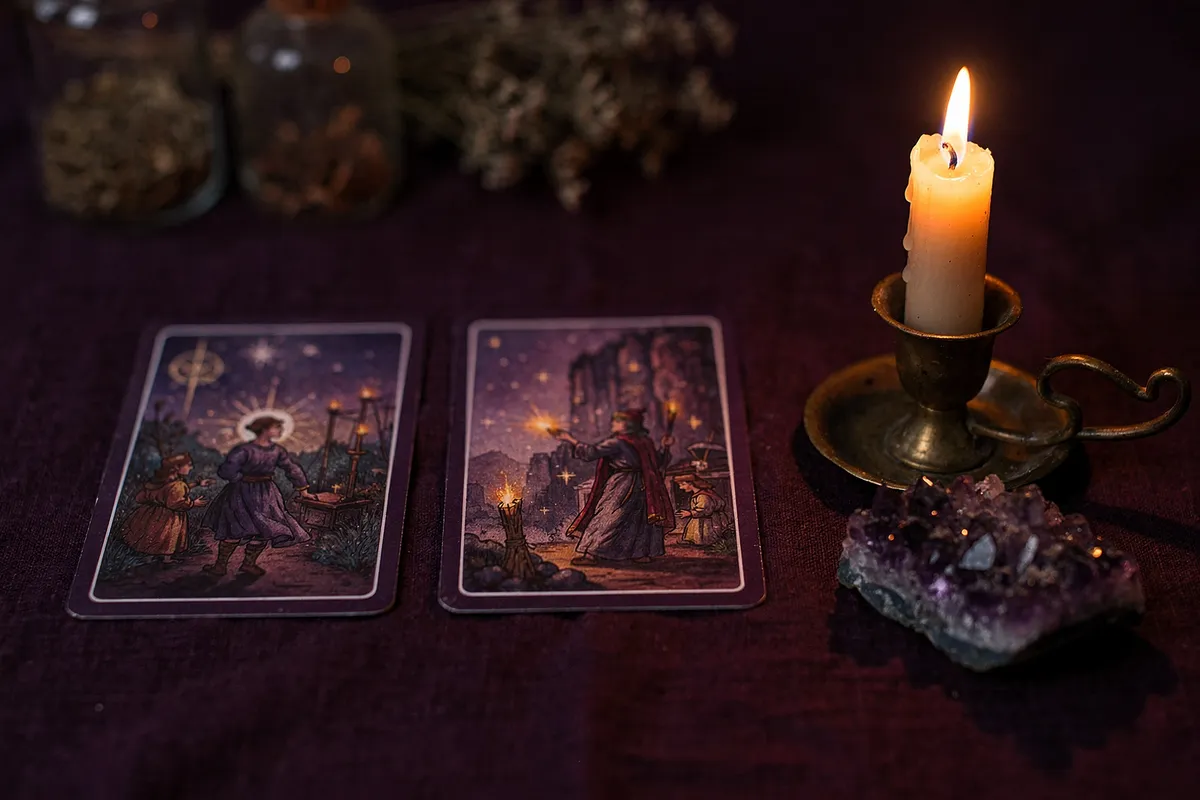
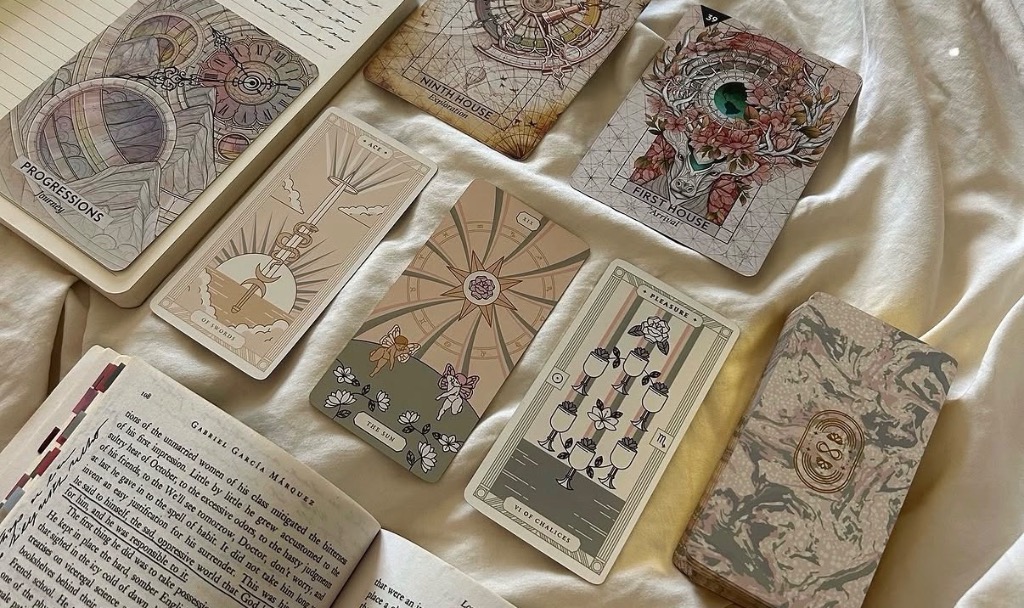
Tarot refers to the deck and the technique, not to any particular gift. Britannica traces the deck to Italy in the 1430s, when a fifth suit of 21 specially illustrated cards was added to an existing four-suited pack; the shift toward fortune-telling came later, in France, around the 1780s. A tarot reading works by laying cards in a spread and reading each card's assigned meaning against its position and its neighbors. That means tarot can stand on its own as a structured method of reflection, or it can be one more tool a psychic or medium reaches for inside a broader session — the cards don't require either reader to claim anything beyond knowing how to read them.
Psychic: the broad word
"Psychic" is the umbrella term: a practitioner working from intuition or impression, with or without a deck of cards, a pendulum or any other tool. A psychic reading might lean on tarot throughout, might use something else entirely, or might use nothing but the practitioner's own read on what you bring into the session. The common thread isn't the tool, it's the claim underneath it — that the practitioner is picking something up that plain conversation wouldn't surface on its own. That overlap is also why most tarot readers describe themselves as reading the cards intuitively rather than reciting a fixed rulebook; in practice, "tarot reader" and "psychic" blur together more often than the two separate listing names suggest.
Medium: specifically about someone who died
Medium is the narrowest of the three words, and the one with an actual, specific claim attached to it: contact with someone who has died. Britannica traces the modern spiritualist movement to events reported at a farmhouse in Hydesville, New York, in 1848 — a movement built on the idea that the dead can communicate with the living, typically with a medium acting as the go-between. Every medium is working psychically in some sense, but not every psychic works as a medium, and plenty of tarot and psychic readings never involve anyone who has passed away at all. If reaching someone specific is the point of the reading, "medium" is the word to look for on the listing, not a guess.
So which one do you actually need?
Match the word to the actual shape of your question, not to whichever term feels most familiar. A question about a relationship, a job change, or a decision sitting in front of you right now is a tarot or psychic question — you're asking for reflection on something happening in your own life, not contact with anyone who has died. A mediumship reading is the right booking specifically when what you're carrying is a connection to someone who has passed, and you're looking for that particular kind of session rather than general guidance on what's ahead.
What none of them can promise
None of the three is a forecast you can bank on, and most people already treat it that way. Pew Research Center found that 30% of U.S. adults consult astrology, tarot cards or fortune tellers at least once a year, and that most of that group does it for fun rather than for guidance on an actual decision — only 1% said they lean on it heavily, and another 5% said they lean on it a little. Age shapes which tool people reach for, too: Pew found close to a quarter of adults under 30 consult tarot specifically in a given year, against 3% of adults over 65.
On Divina, nothing booked under any of these three words is sold as settled fact, and no practitioner may promise a specific outcome. Every reading here is for entertainment and personal reflection, never a guarantee, and every practitioner is reviewed by a person before their shop opens.
If what's bringing you to a mediumship reading is a recent loss, that's grief, and grief isn't something a reading should carry alone. Our crisis resources list people trained to help right now.
Before you book
Say the actual shape of your question in the order chat before you pay. "I want clarity on a decision" reads very differently to a practitioner than "I'm hoping to hear from my father," and a good one will tell you plainly if what you're asking doesn't fit the kind of session they offer. If you're still deciding between a few listings, questions to ask a tarot reader has more on what a practitioner will and won't claim going in. Every reading is priced by the practitioner themselves; current prices for tarot and current prices across psychic readings generally are both on the price pages rather than written here by hand.